


Better Archeology Mod (1.21.11, 1.20.1) – Discover Artifacts & Fossils

 0
0  April 14, 2026
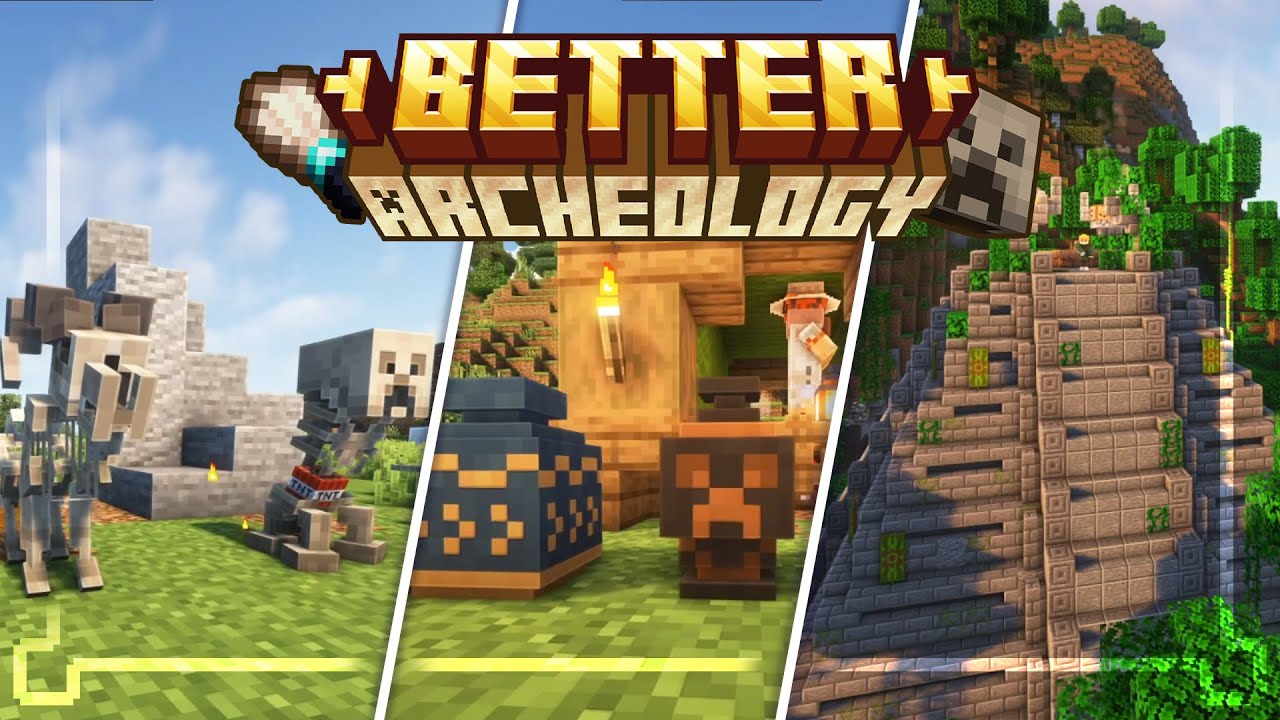
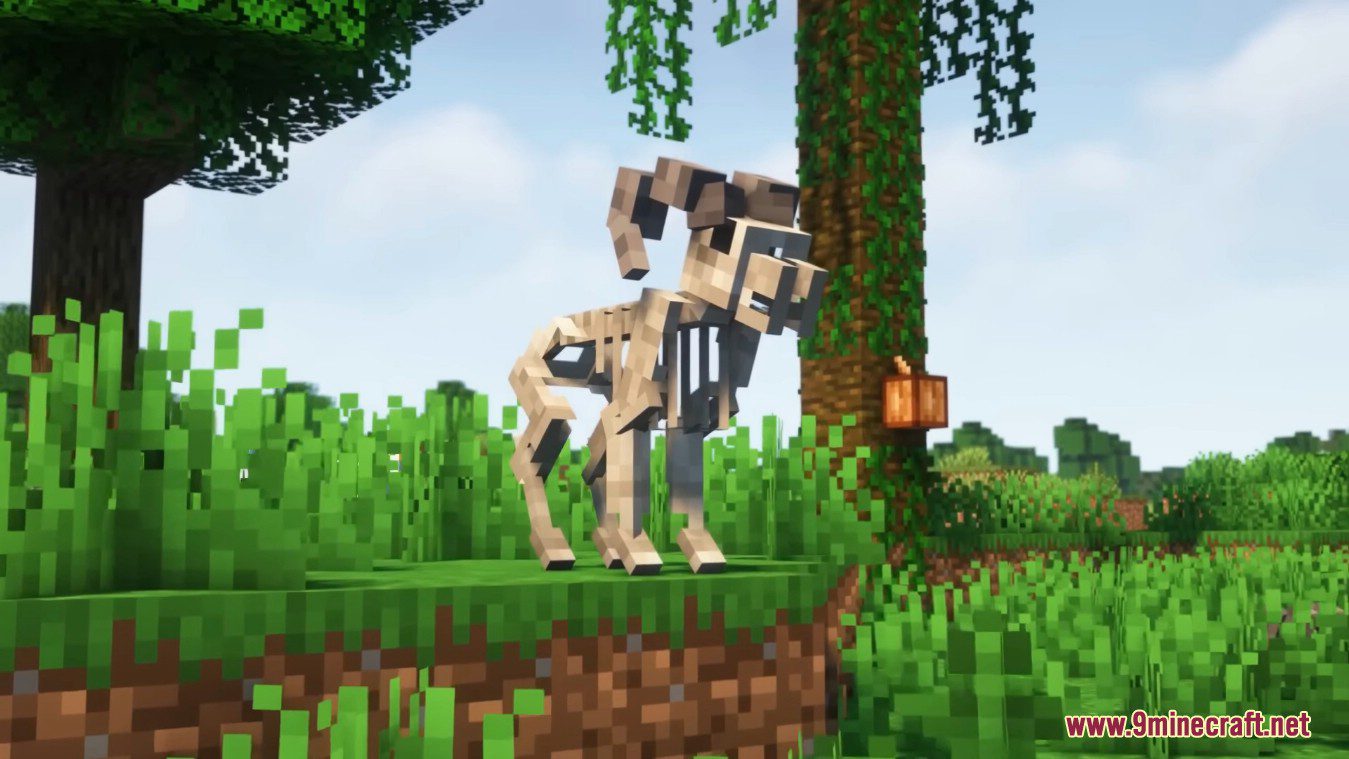
With the theme of archeology being introduced in the Minecraft 1.20 “Trails & Tales” Update, it has quickly become clear that Mojang sadly only took a small step into the big world that is archeology. Better Archeology Mod improves upon the mechanics introduced in the update and expand the minecraft universe with new stuff to discover while staying true to the nature of the game. Discover artifacts & fossils by encountering new structures that’ll enhance your adventure and exploration.
Features:
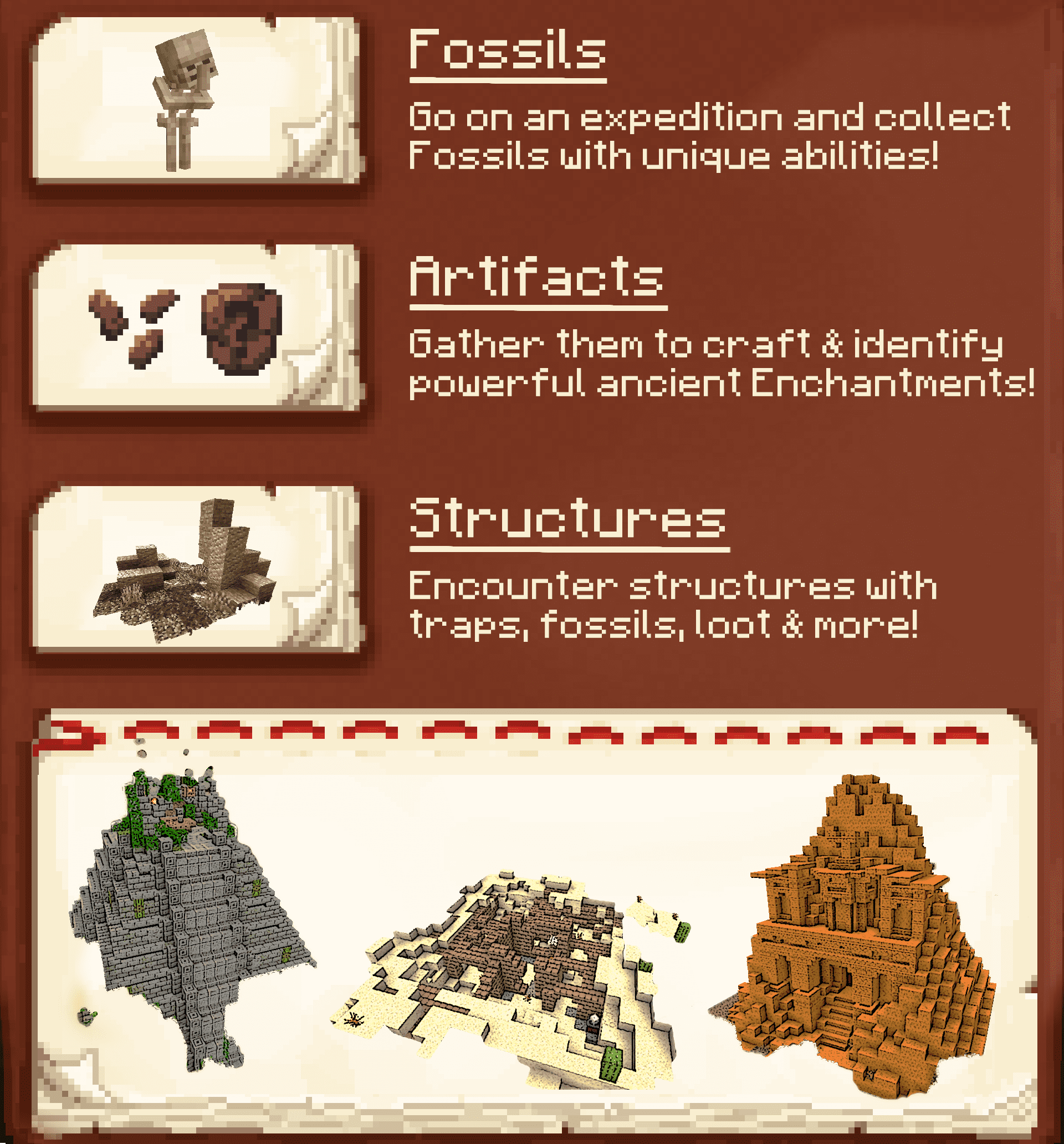
Artifacts
The mod introduces a system of recoverable archaeological items that are analysed and converted into usable enhancements. Key components:
- Archeology Table – a workbench that analyses Unidentified Artifacts using a brush; it outputs one of several Identified Artifacts that act as consumable catalysts for ancient-style enchantments.
- Artifact Shards – fragments found by breaking pots or brushing suspicious sand; used as crafting or assembly components.
- Unidentified → Identified Artifacts – unidentified plates are resolved via the Archeology Table; identified artifacts can be applied to equipment (for example via an anvil) and function similarly to enchanted books.
- Artifact Enchantments (examples) – short descriptions of notable enchantments provided by artifacts:
- Tunneling – breaks the block below the targeted block when conditions (tool suitability and hardness) allow; useful for efficient strip-mining.
- Soaring Winds – provides an initial Elytra thrust (startup boost) so rockets are not required for short takeoffs; configurable thrust magnitude.
- Penetrating Strike – applied to swords or axes; partially ignores Protection-type armor effects; behavior is adjustable in config.
Blocks
The mod adds blocks that support the archaeology gameplay loop (workstations, suspicious blocks, and environmental markers). These blocks mainly exist to:
- Serve as workstations (e.g., the Archeology Table) for analyzing finds.
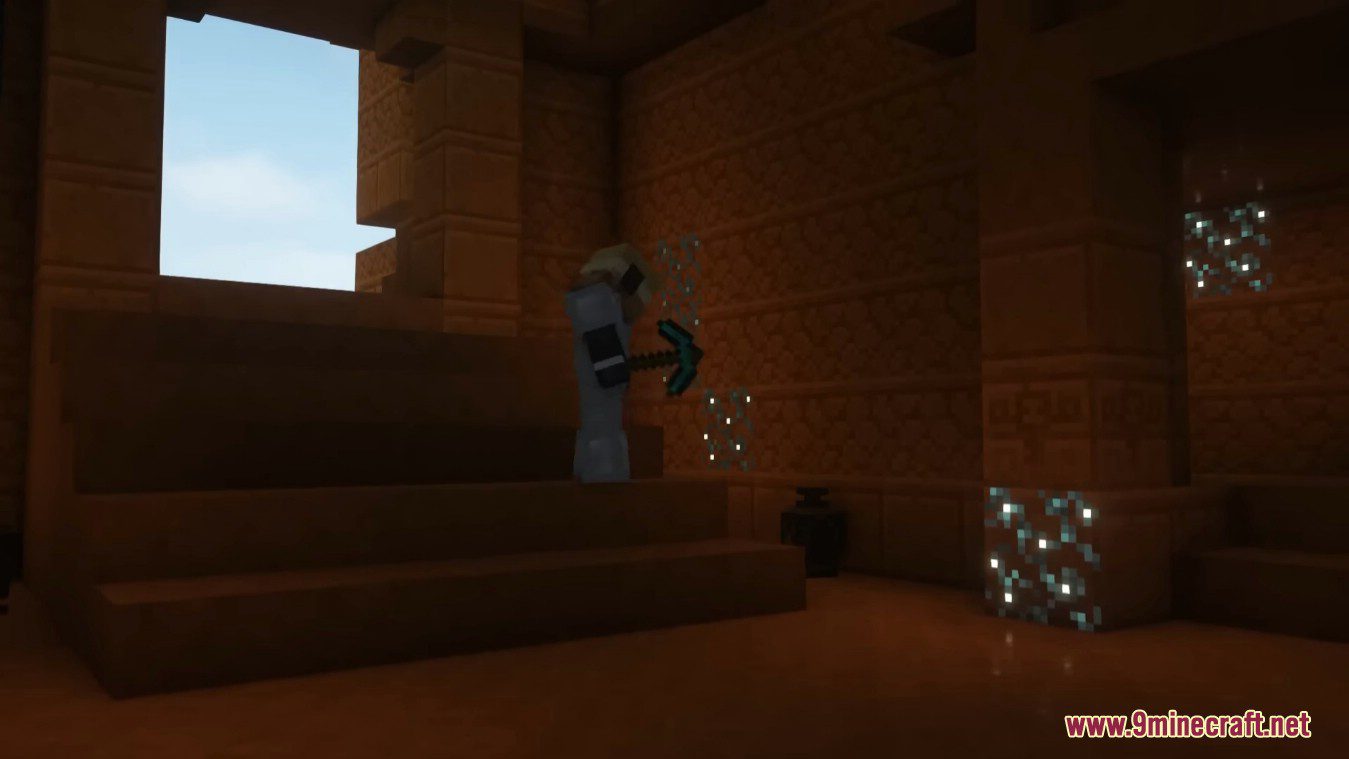
- Represent suspicious materials or excavation sites that can be brushed to reveal shards, artifacts, or fossils.
- Integrate with world generation so that archaeological resources appear in context with structures and fossil deposits.
Fossils
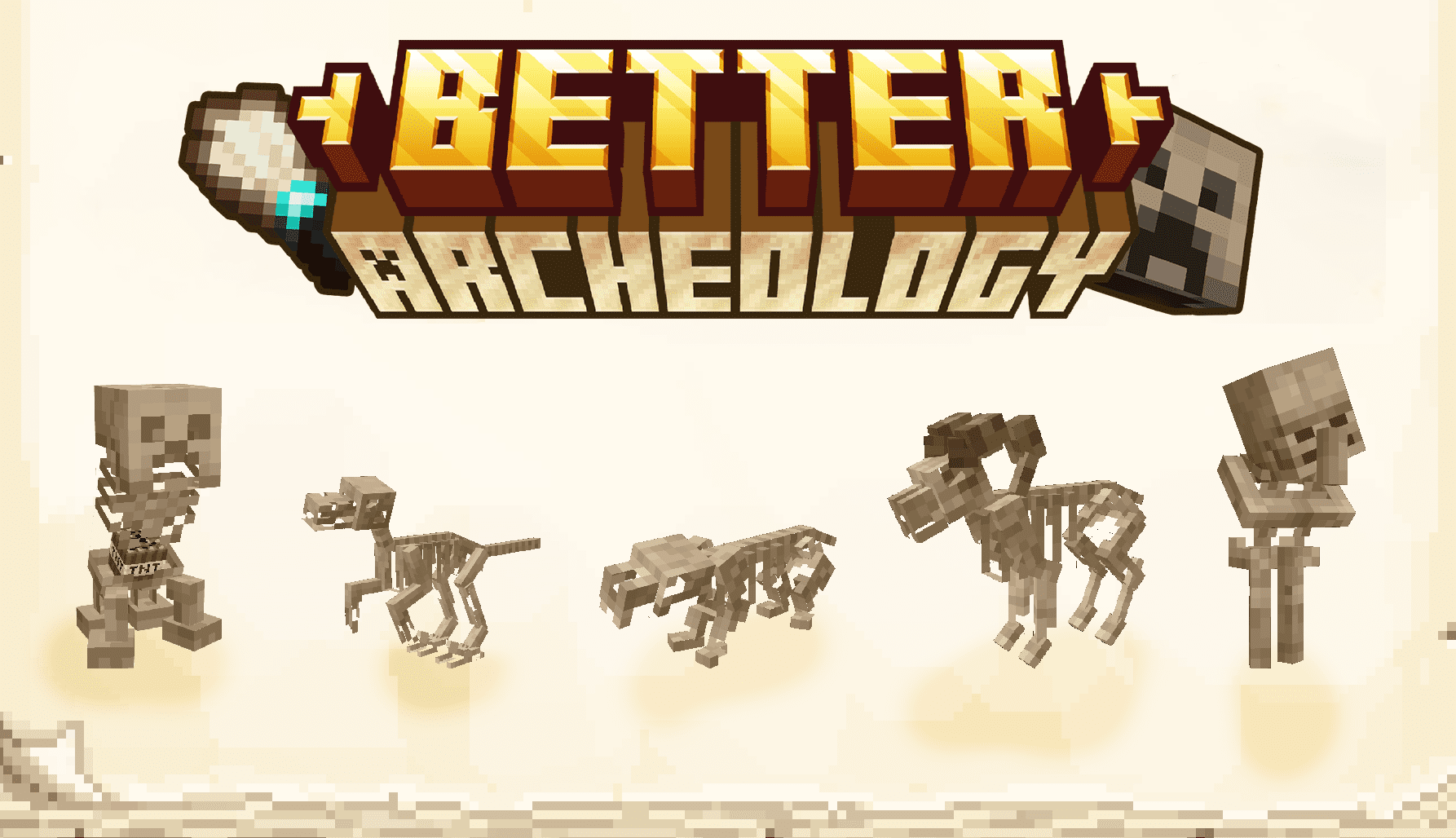
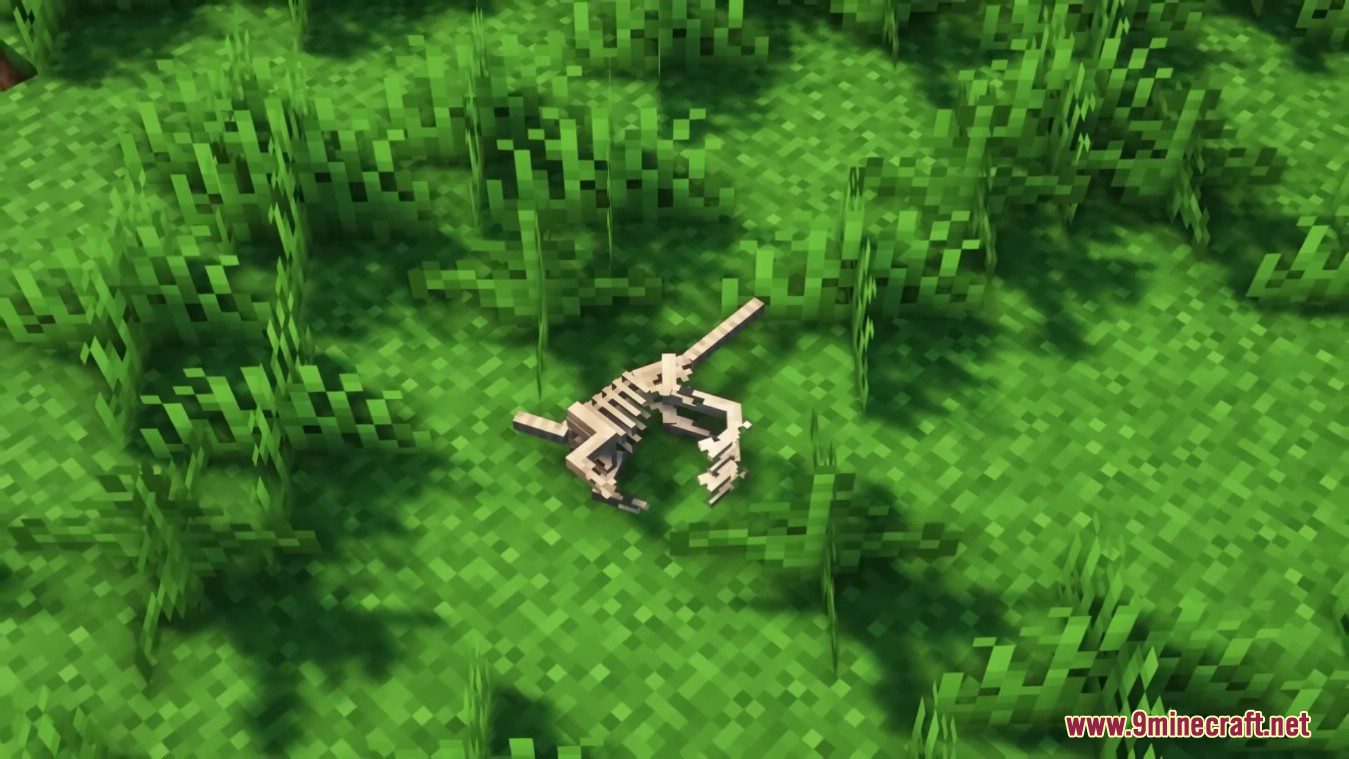
Fossils are recoverable multi-block deposits that yield paleontological items and components. Their role and mechanics:
- Discovery mechanic: fossil blocks are found in the world and can be excavated or brushed to retrieve fossil pieces.
- Processing: retrieved fossil pieces are processed into collectible fossil items that may combine into larger finds or be used for research-like progression.
- Integration: fossils are designed to coexist with other mod features (structures, artifact shards), expanding exploration rewards.
Items
Items introduced by the mod support excavation, analysis, and the practical use of discoveries. Principal item categories:
- Tools and consumables – brushes and other excavation tools required to reveal shards and fossils.
- Crafting components – artifact shards, fossil fragments, and related materials used in recipes or analysis.
- Result items – identified artifacts and specialized items that confer enchantments or trade value.
Structures
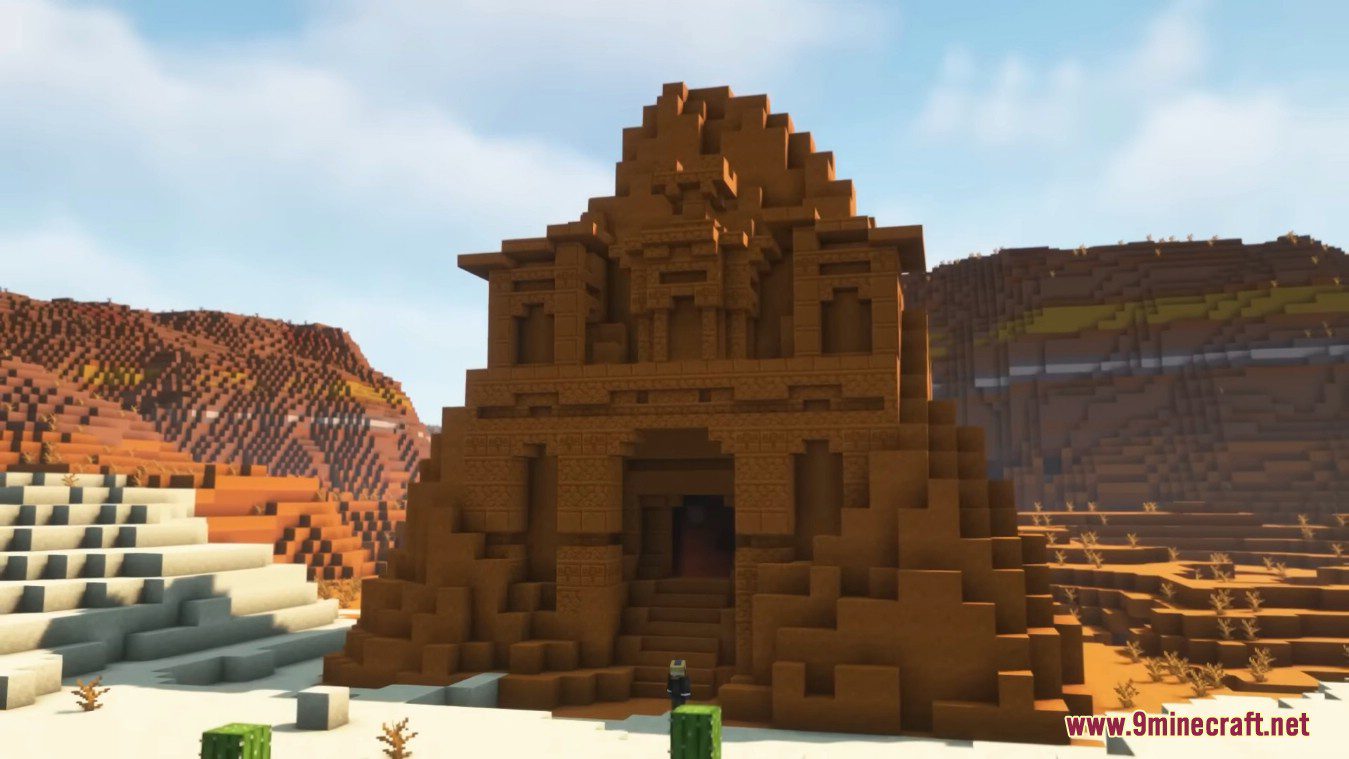
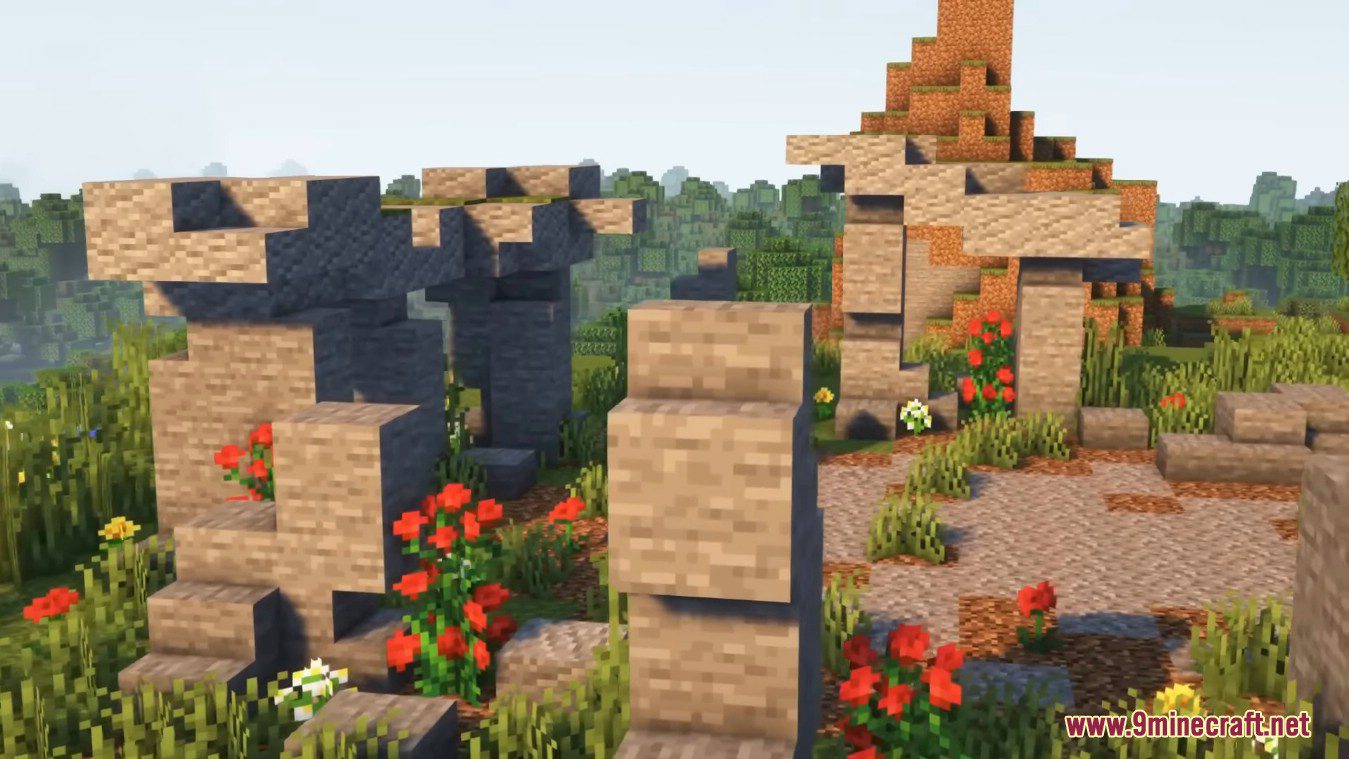
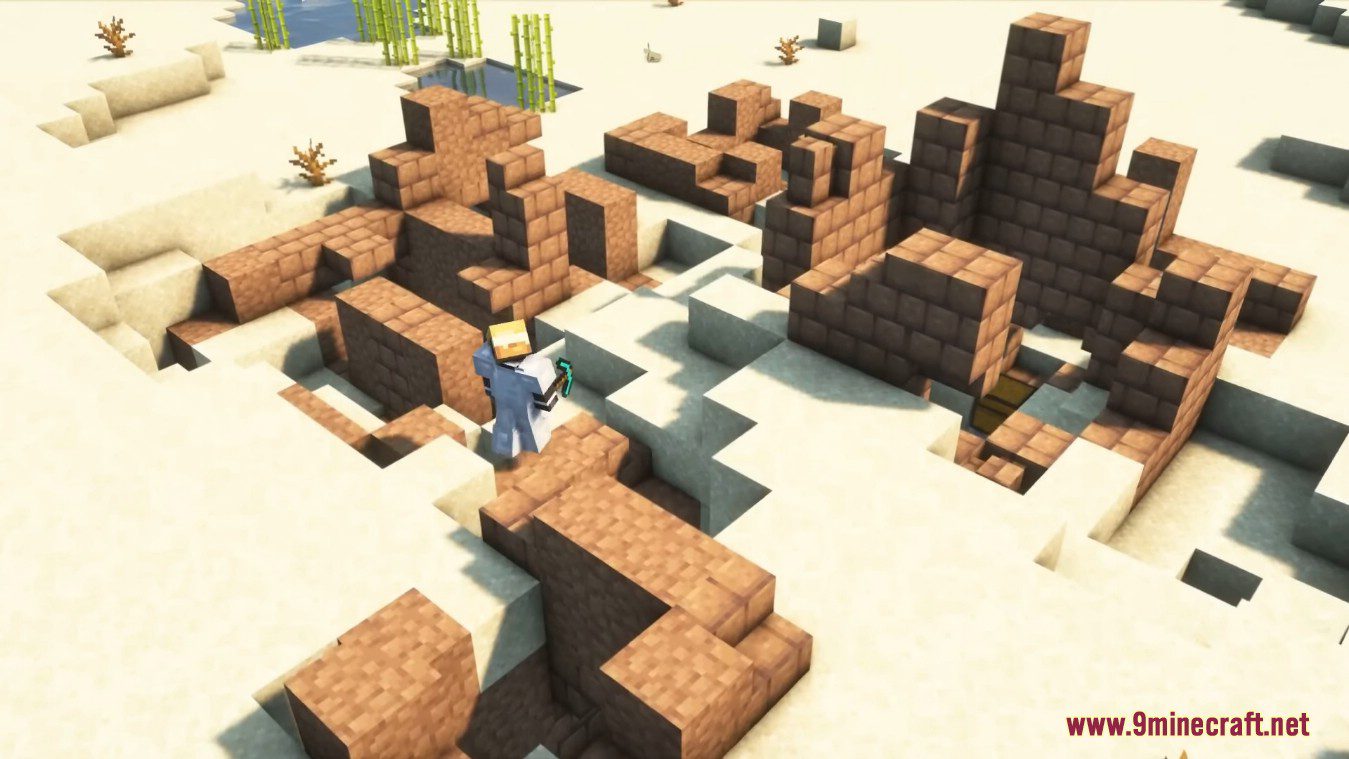
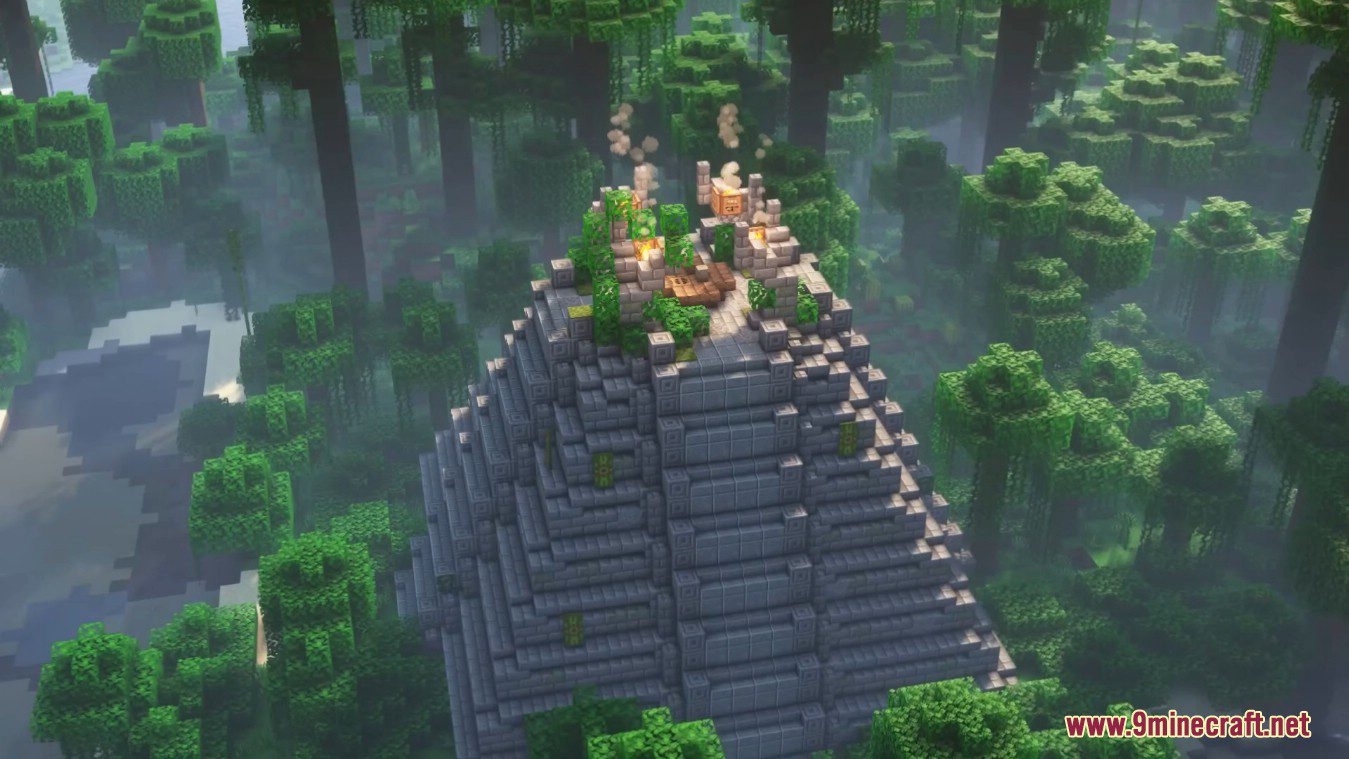
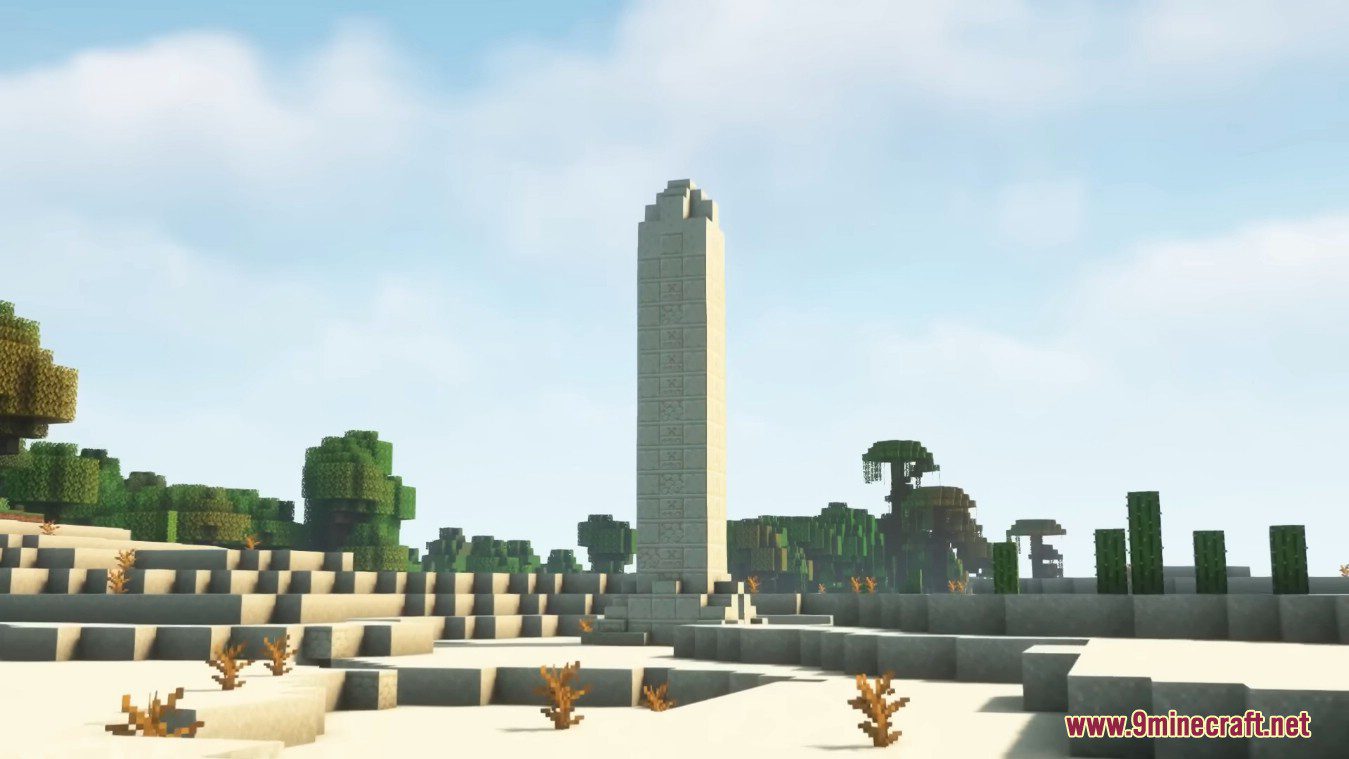
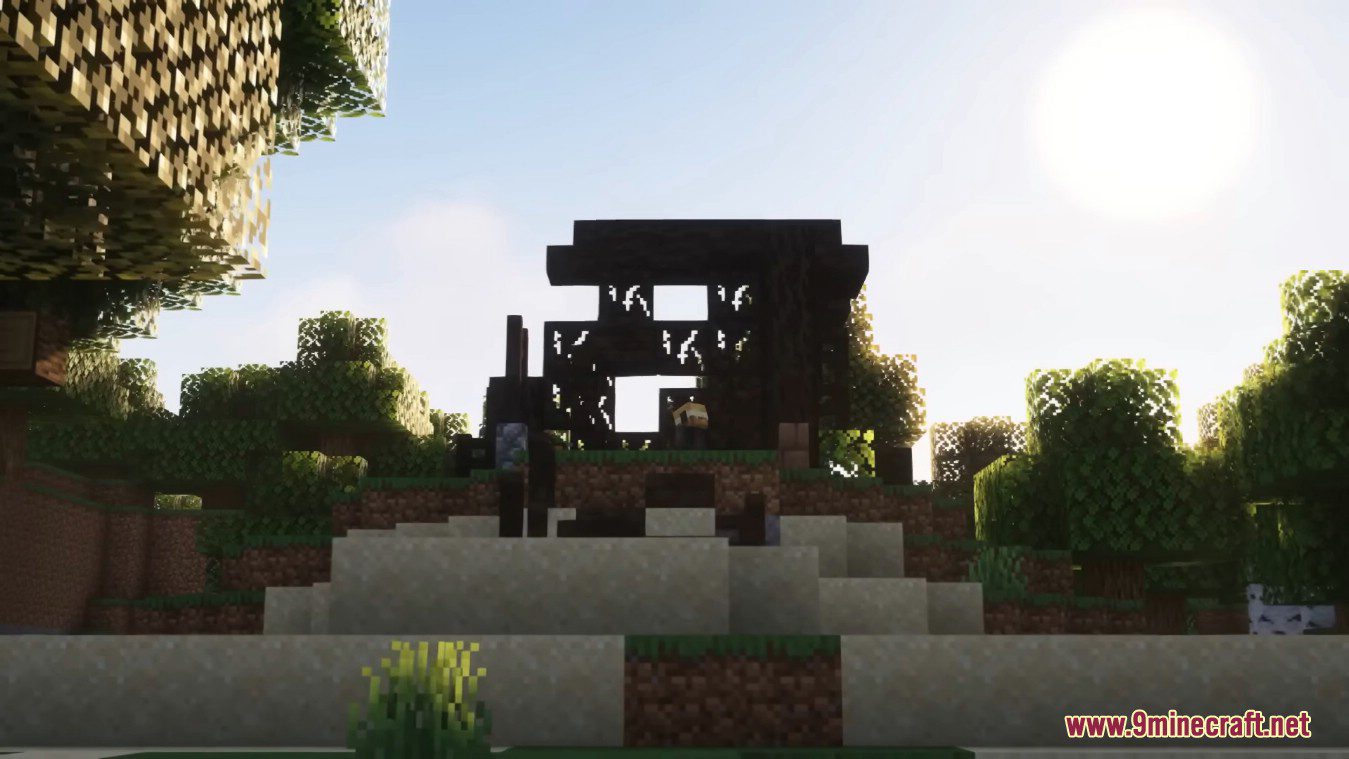
The mod adds or tags world structures that create archaeological context and provide reliable spawn points for artifacts and fossils. Design intent and characteristics:
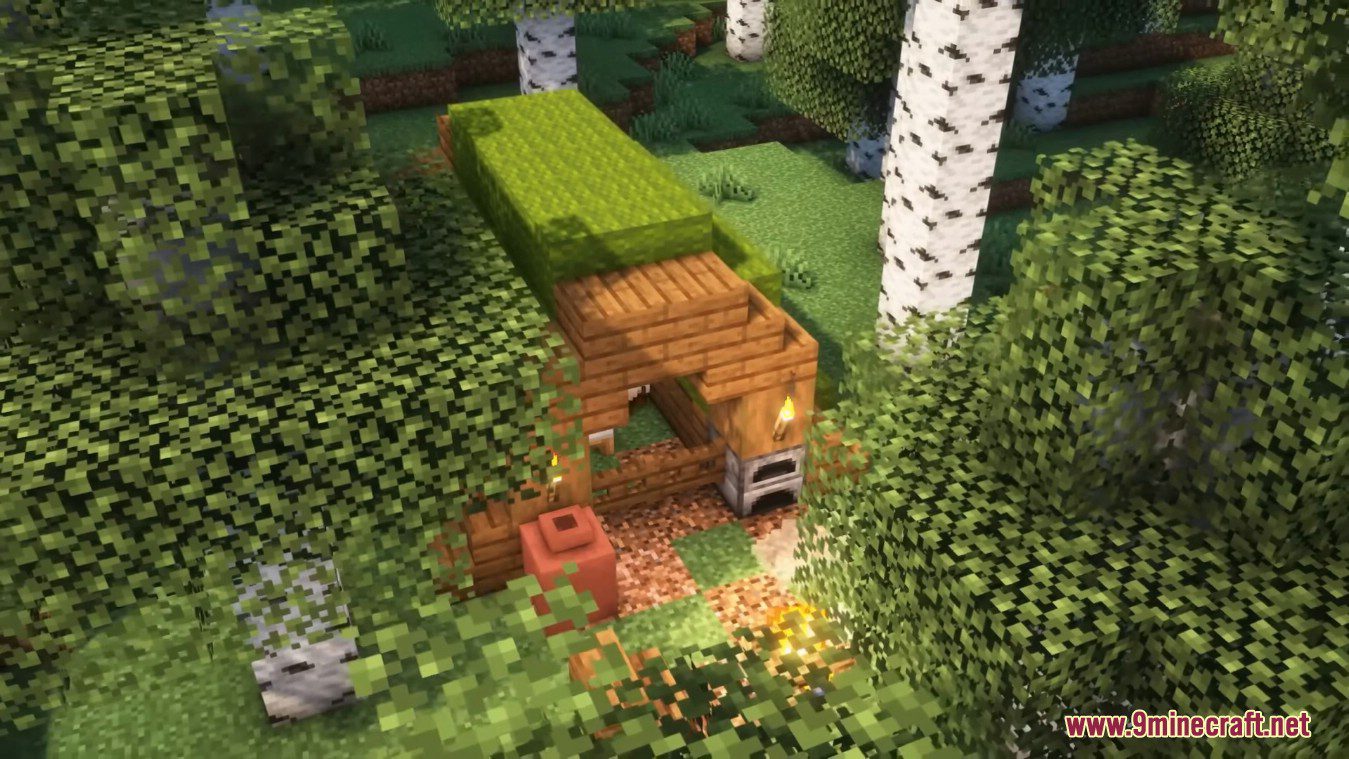
- Ruins and tents – points of interest where NPCs (such as the Archeologist) or stash items may appear.
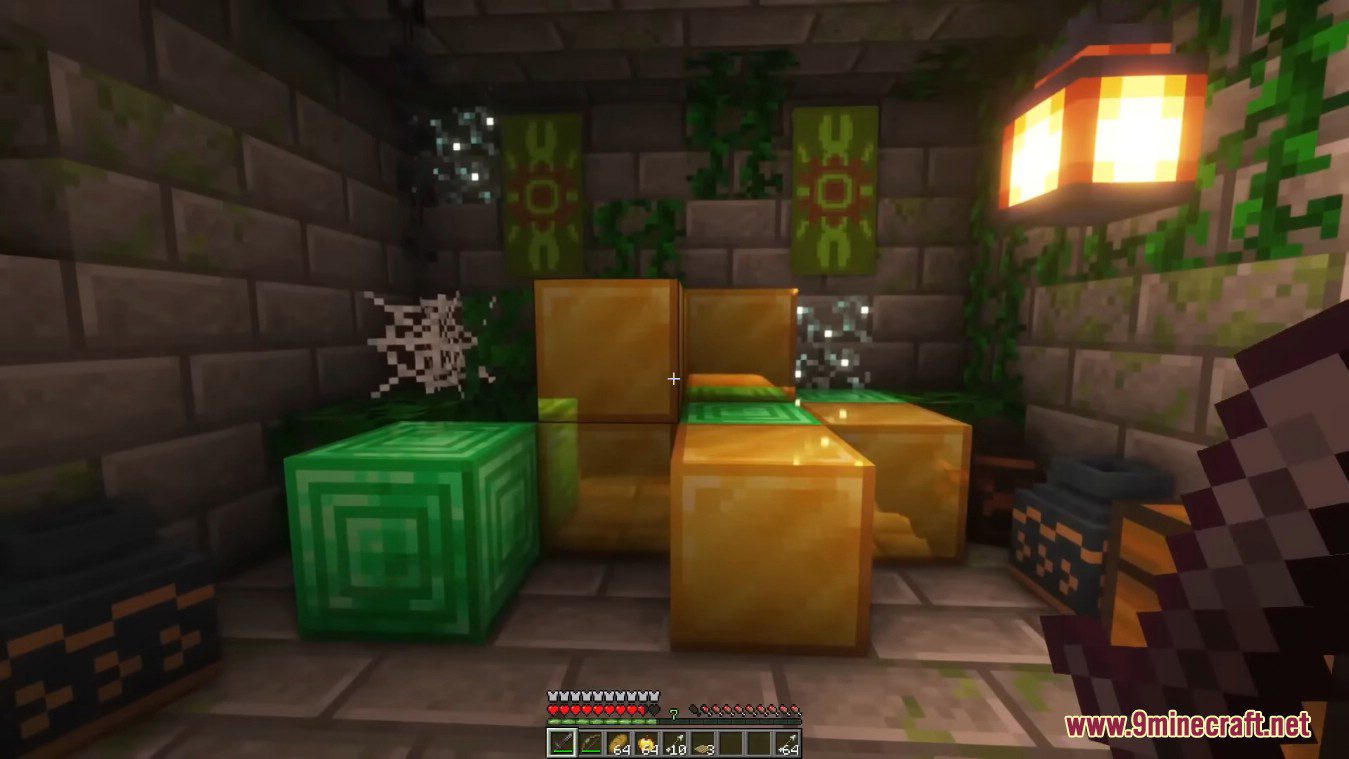
- Integration with loot – structures often contain pots, chests, or suspicious sand that produce shards, artifacts, or fossil material when interacted with or broken.
- Exploration incentive – structures are designed to reward players who search, brush, and excavate rather than only mine.
The Archeologist (NPC) – behavior and role
The Archeologist is an NPC with a trade-based role focused on archaeological items:
- Location and station: commonly found at the Archeology Table or travelling between tented expedition sites.
- Trading behaviour: trades relics, artifacts, and expedition-related items for emeralds; can be used as a player-facing economy sink or source for archaeological finds.
- Planned expansions: the NPC may eventually be able to trade explorer maps or other location-based information for archaeological structures.
Concise technical notes and assumptions
- Configurable mechanics: several artifact effects and enchantment factors are configurable (for example, Soaring Winds thrust magnitude and Penetrating Strike configuration).
- Interaction model: the gameplay loop is: find suspicious blocks or structures → brush or excavate → obtain shards or fossils → analyse at Archeology Table → obtain identified artifacts or items → apply, use, or trade via Archeologist.
- Mod intent: to add a structured, exploration-first archaeology layer to Minecraft that rewards observation and careful interaction rather than brute-force mining.
Screenshots:
How to Install:
New to Minecraft? Follow our step-by-step guide to install Mods on your PC.View Guide
Requirements:
 Minecraft Forge Required
 NeoForge Required
 Fabric Loader Required
 Fabric API Required
 Enchantment Descriptions Mod Required
 Cristel Lib Mod Required
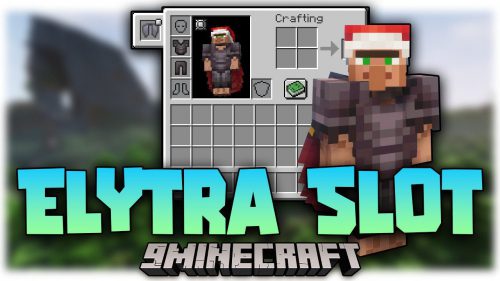 Elytra Slot Mod Required
 Curios API Required
 YUNG’s API Required
 Resourceful Config Mod Required
 SuperMartijn642s Config Lib Required
 CIT Resewn Mod Required
 Trinkets Compat Layer For Accessories Mod Required
 Architectury API Mod Required
Better Archeology Mod Download Links
For Minecraft
1.21.11,
1.21.10,
1.21.9
All Versions Covered
1.21.11
1.21.10
1.21.9
1.21.8
1.21.7
1.21.6
1.21.5
1.21.4
1.21.1
1.21
For Minecraft 1.21.10
For Minecraft 1.21.4
For Minecraft 1.21.1, 1.21
For Minecraft 1.20.4
For Minecraft 1.20.1, 1.20
You May Also Like



This post has no comments yet. Be the first — your comment will appear here.